.png)
By Bob Hayward, Managing Director, Be More Effective Ltd
“Appraisals are only as effective as the conversations they spark.” - Be More Effective
The journey of performance appraisals is a fascinating one, shaped by shifting business priorities, evolving leadership philosophies, and the relentless pursuit of organisational improvement. With over 25 years working on the people side of businesses, large and small, I’ve witnessed the highs and lows of appraisal systems in action, from bureaucratic box-ticking to transformative, business-driving dialogues.
Here’s what history, evidence, and experience reveal about how appraisals have changed, and what truly works today.
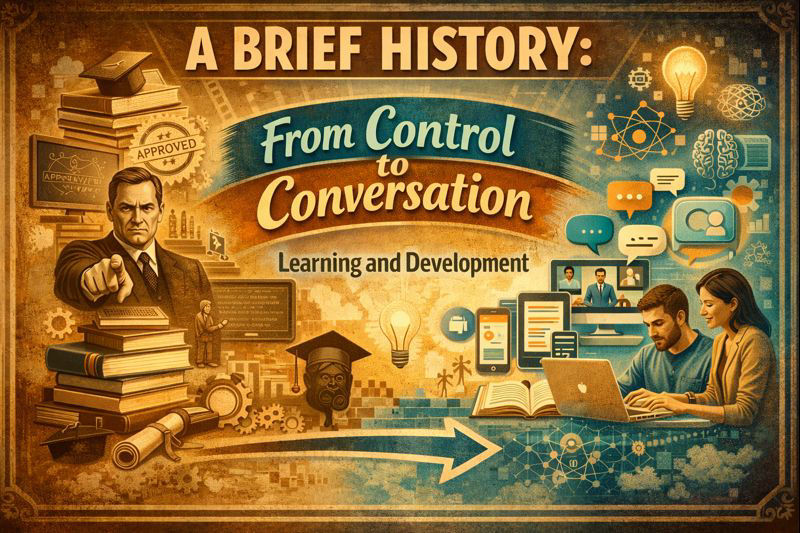
A Brief History: From Control to Conversation
- Early Days (1940s–1960s): Post-war appraisals were rooted in military-style ranking and control, focusing on identifying underperformers for discipline or dismissal (Grote, 2002).
- 1970s–1980s: The rise of Management by Objectives (MBO) (Drucker, 1954) shifted focus to goal-setting and alignment, but systems remained hierarchical and compliance-driven.
- 1990s: Introduction of 360° feedback, aiming for a more holistic view of performance, yet often overwhelming managers with data and little action (London & Smither, 1995).
- 2000s–2010s: Growing disillusionment with annual appraisals; studies (CIPD, 2016) show 1 in 4 employees found them demotivating. Agile and continuous feedback models emerge, influenced by tech sector practices (Adobe, Deloitte).
- 2020s: The pandemic accelerates flexible, digital, and human-centric approaches - performance conversations become regular, coaching-focused, and tied to real business outcomes.
What the Evidence Shows
- Box-Ticking Fails: Research from Gallup (2019) found only 14% of employees strongly agree their performance reviews inspire improvement.
- Conversation Wins: Organisations with regular, high-quality feedback see 21% greater profitability (Gallup, 2017).
- Measurement Matters: Post-appraisal action tracking leads to higher engagement and retention.
Principles for Effective Appraisal Today
1. Make it Continuous: Annual reviews are dead. Replace with quarterly or monthly check-ins.
2. Focus on Dialogue: Use open questions, listen actively, and co-create goals (see GROW model).
3. Link to Business Outcomes: Tie objectives to measurable KPIs and organisational priorities.
4. Equip Managers: Train in feedback skills and use structured tools - e.g., BME Appraisal Helper Bundle and 50 Activities for Performance Appraisal Training.
5. Measure and Improve: Track follow-up actions, not just completion rates. Use simple, evidence-based frameworks.
Examples in Action
- Vodafone: Shifted from annual reviews to monthly coaching sessions, reporting a 30% increase in employee engagement (Vodafone HR Report, 2022).
- Be More Effective Clients: Those adopting the BME Appraisal Helper Bundle report faster improvement in manager confidence and appraisal outcomes.

Conclusion: The Future is Human-Centric
“Effective appraisals are less about forms, more about forward-focused conversations.” — Be More Effective
Decades of trial and error show that appraisals succeed when they’re:
- Frequent and forward-looking
- Tied to real business impact
- Supported by practical tools and skilled managers
For organisations ready to transform, start by investing in robust frameworks like the Performance Appraisal Skills Inventory and the BME Appraisal Helper Bundle. Combine these with a culture of open dialogue and continuous improvement, and you’ll unlock the true value of performance management.
Sources:
· Grote, R. (2002). The Performance Appraisal Question and Answer Book.
· Drucker, P. (1954). The Practice of Management.
· London, M., & Smither, J. (1995). Can Multi-Source Feedback Change Perceptions of Goal Accomplishment, Self-Evaluations, and Performance-Related Outcomes?
· CIPD (2016). Could Do Better? Assessing What Works in Performance Management.
· Gallup (2017, 2019). State of the American Workplace.
· Vodafone HR Report (2022).
· Be More Effective client case studies.